
Solid Wood vs Engineered Wood Desks: Why Material Matters More Than Anything Else
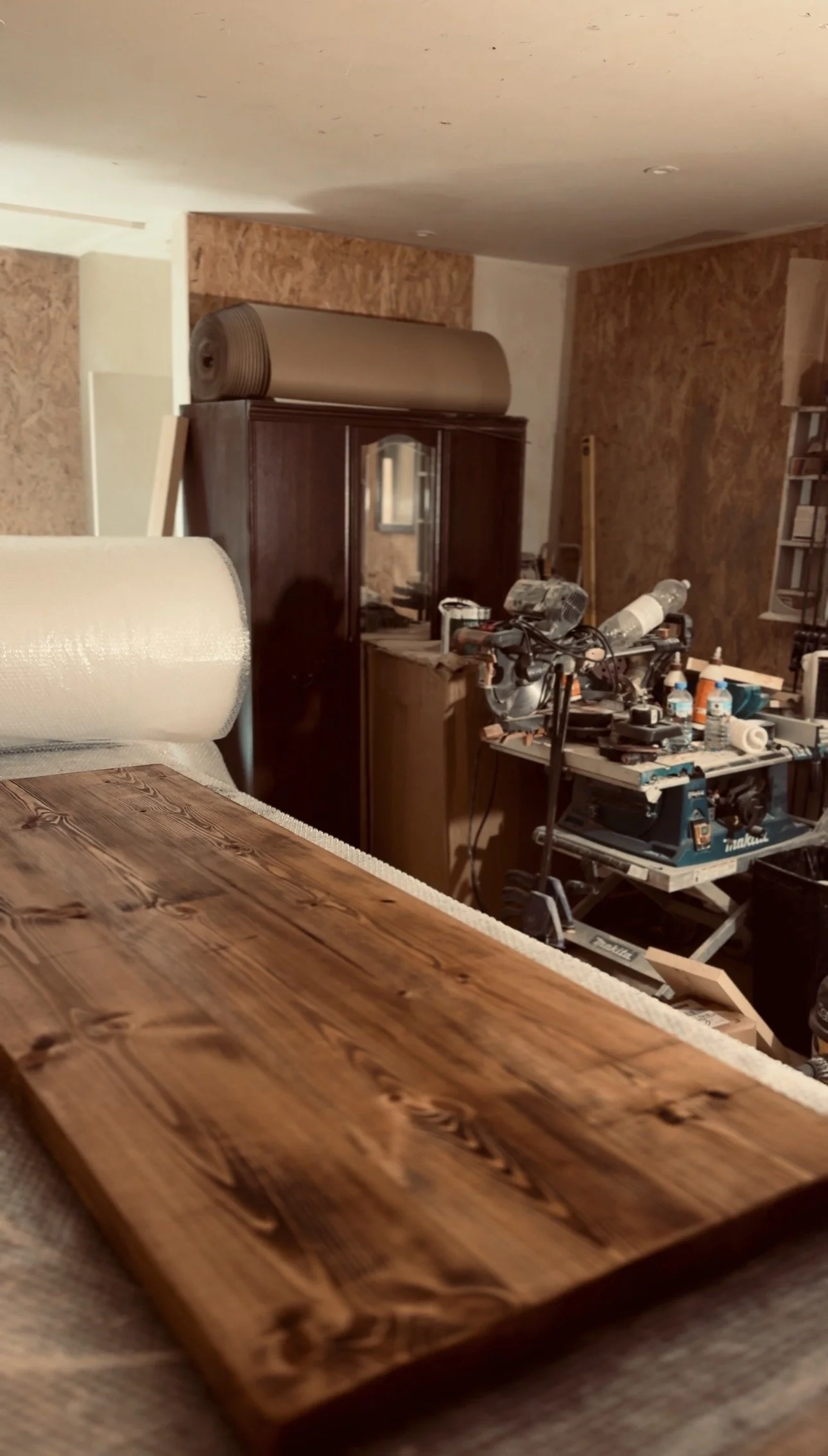
Finished solid Swedish redwood desk, built by hand in my workshop.
Most desks available today are made from engineered materials designed for mass production. They often imitate real wood visually, but structurally they are entirely different. Every desk I build at Artemis London is made from solid Swedish redwood, selected, joined, and finished by hand in my workshop. The material choice defines everything — how the desk feels, how stable it remains over time, and whether it lasts years or decades. Understanding the difference between solid wood and engineered wood is the single most important factor when choosing a desk that is built to last.
What Is a Solid Wood Desk?
A solid wood desk is made entirely from real timber. Each board is selected, measured, joined, and finished to form a single continuous surface. The structure is defined by the natural strength of the wood itself, not by adhesives or manufactured composites.
Every desk I build begins as individual Swedish redwood boards in my workshop. These boards are carefully aligned, marked, and joined to create a structurally unified desk top. The finished surface is not a covering or imitation. It is the material itself.
Solid wood carries its own natural grain, markings, and subtle variations. No two desks are identical, and this individuality is part of what makes solid wood furniture permanent rather than disposable.
What Is an Engineered Wood Desk?
Engineered wood desks are made from manufactured boards such as MDF, chipboard, or plywood. These materials are formed by compressing wood fibres, particles, or layers together using adhesives.
They are designed for efficiency and uniformity in large-scale production. Many are finished with a veneer layer to replicate the appearance of real wood.
While engineered desks can appear similar initially, the underlying structure is fundamentally different. The core material does not have the same natural strength, longevity, or integrity as solid timber.
This difference becomes more apparent over time.
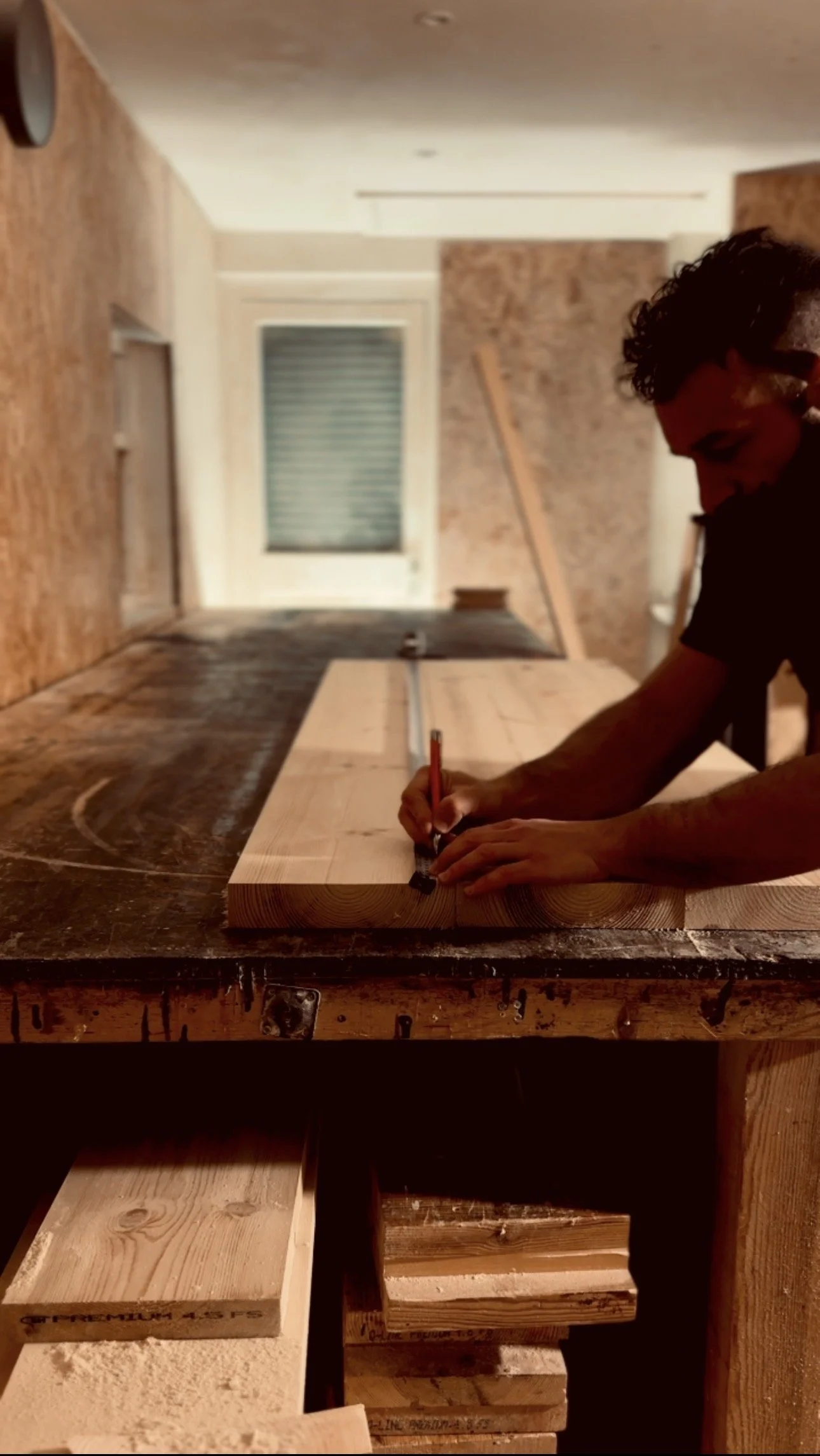
Measuring and marking solid Swedish redwood before joining the desk top.
Structural Strength and Stability
Solid wood has continuous natural fibres running through the entire desk top. This gives it structural strength and long-term stability.
Each desk I build is formed by joining full-thickness Swedish redwood boards into a single solid structure. The material supports weight naturally and remains stable through years of daily use.
Engineered materials rely on compressed fibres and adhesives. Over time, these materials can weaken, particularly under constant load.
Solid wood remains structurally dependable.
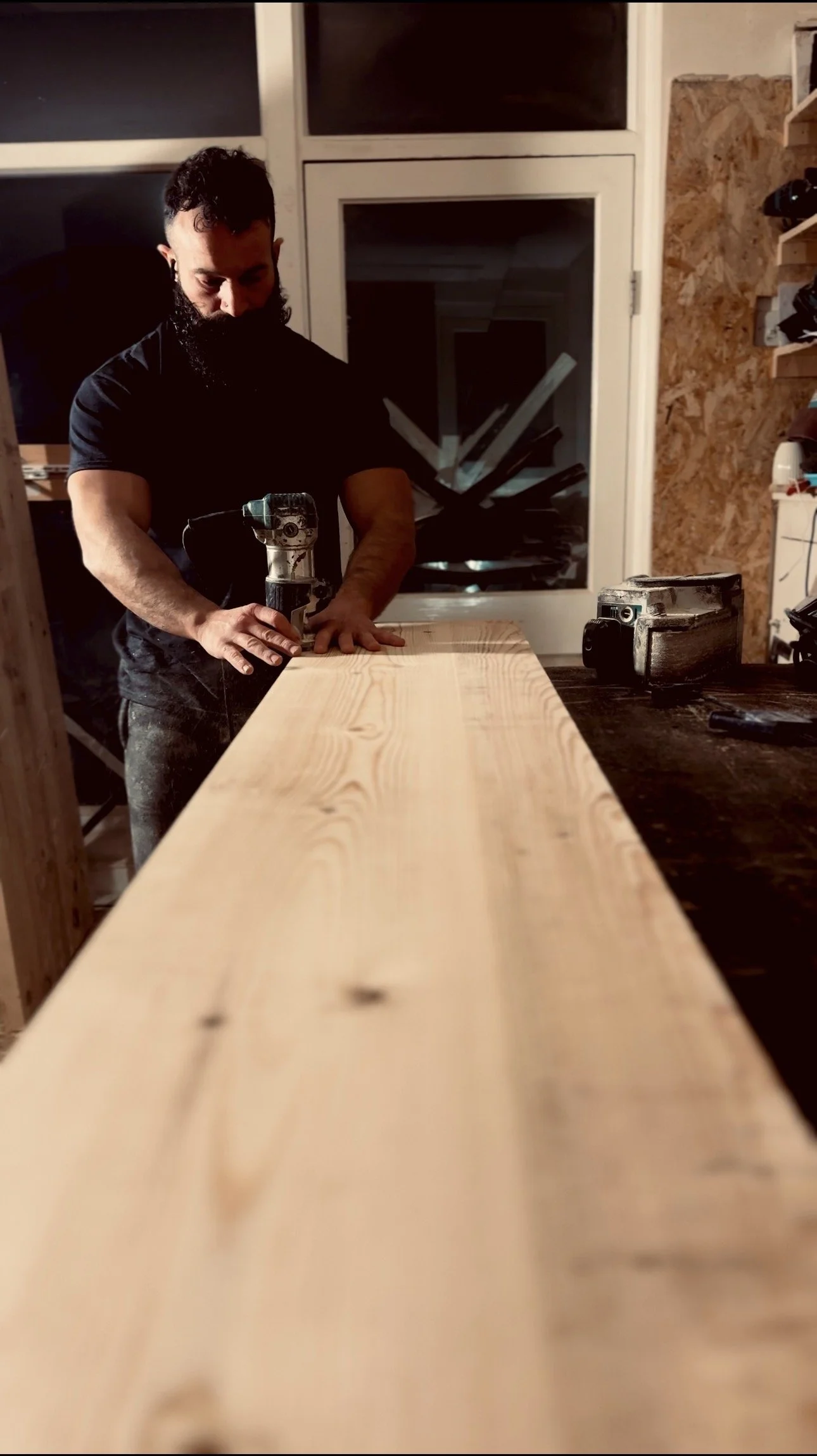
Routing a roundover edge to create a smooth, durable solid wood monitor stand.
Longevity and Repairability
One of the most important advantages of solid wood is its lifespan.
Solid Swedish redwood desks can last for decades. The surface can be refinished if needed, restoring the desk fully without compromising its structure.
Engineered desks cannot be restored in the same way. Once the surface layer is damaged or the internal structure weakens, repair is often limited or impossible.
Solid wood furniture is built to endure.
Natural Character and Ageing
Solid wood evolves naturally over time. The grain deepens, the tone matures, and the surface develops subtle character unique to its environment.
This process enhances the individuality of the desk.
Engineered materials do not age in the same way. They remain static until deterioration begins.
Solid wood gains character rather than losing integrity.
Why I Build Every Desk from Solid Swedish Redwood
Swedish redwood offers an ideal balance of strength, stability, and natural warmth. When properly selected and joined, it produces desks that remain structurally sound and visually enduring.
Every desk I build is constructed by hand in my workshop from solid timber throughout. This ensures each piece is structurally dependable and built to last.
Furniture should not feel temporary. It should feel permanent.
Caring for Solid Wood Furniture
Solid wood is designed to last, and with minimal care it will remain stable and beautiful for decades. Because it is a natural material, it responds subtly to its environment. Simple measures such as maintaining a stable indoor climate and cleaning with appropriate products help preserve its integrity and finish.
I’ve written a detailed guide explaining how to care for solid wood furniture properly, including cleaning, maintenance, and long-term preservation.
Read the full wood care guide here:
Furniture Care | Solid Wood Maintenance | Artemis London — ARTEMIS LONDON
See How a Solid Wood Desk Is Made